How Freeze-Thaw Cycles Damage Asphalt Driveways
Understanding how freeze-thaw cycles damage asphalt driveways is essential for homeowners, especially in colder climates like Canada. Temperature fluctuations across Canada, as noted by Natural Resources Canada, contribute significantly to freeze-thaw stress on outdoor surfaces. While asphalt is designed to handle temperature changes, repeated freezing and thawing can weaken the surface over time and lead to serious structural issues.
If left untreated, this process can shorten the lifespan of your driveway and result in costly repairs. Knowing what happens and how to prevent it can help protect your investment.
What Are Freeze-Thaw Cycles?
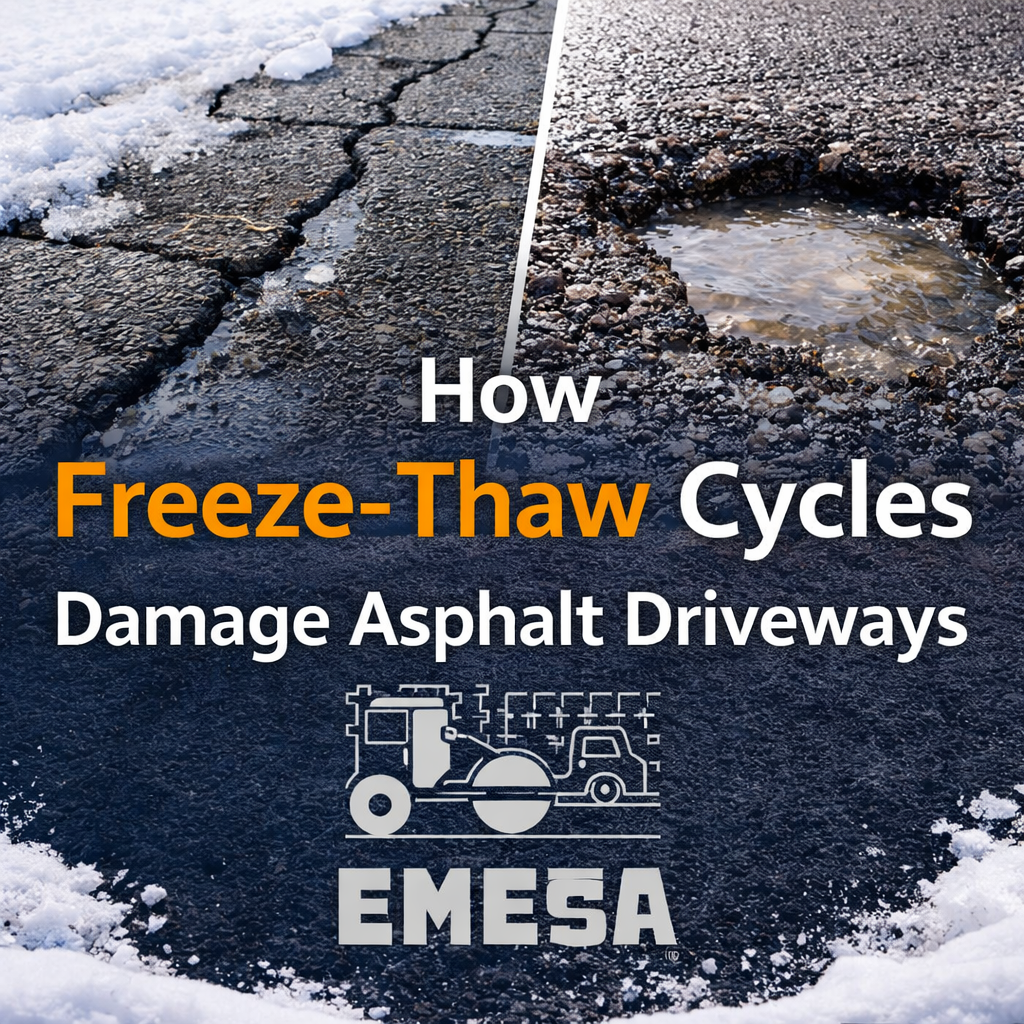
Freeze-thaw cycles occur when temperatures fluctuate above and below freezing. During warmer periods, snow and ice melt into water, which seeps into small cracks in your driveway. When temperatures drop again, that water freezes and expands.
This constant expansion and contraction is exactly how freeze-thaw cycles damage asphalt driveways, gradually widening cracks and weakening the surface from within.
Why Asphalt Is Vulnerable to Freeze-Thaw Damage
Asphalt is slightly porous, meaning it allows water to penetrate the surface over time. While this flexibility helps it adapt to temperature changes, it also makes it vulnerable.
When moisture enters the asphalt and freezes, it expands by up to 9%. This pressure pushes against the surrounding material, causing cracks to grow larger. Over multiple cycles, this is how freeze-thaw cycles damage asphalt driveways and create visible deterioration.
Common Signs of Freeze-Thaw Damage
Recognizing early warning signs can prevent more serious issues later. Some of the most common indicators include:
- Small cracks spreading across the surface
- Potholes forming after winter
- Uneven or sinking areas
- Water pooling in low spots
These signs show that freeze-thaw cycles damage asphalt driveways from both the surface and the base layer, making early intervention critical.
Long-Term Effects on Your Driveway
If ignored, freeze-thaw damage can escalate quickly. Small cracks turn into large fractures, allowing more water to penetrate deeper layers. Eventually, the foundation weakens, leading to potholes and surface collapse.
At this stage, simple maintenance is no longer enough. Many homeowners end up needing full asphalt paving to restore the driveway completely. Preventative care is always more cost-effective than replacement.
How Sealcoating Protects Against Freeze-Thaw Damage
One of the most effective ways to prevent damage is by applying asphalt sealant. Sealcoating creates a protective barrier that blocks water from entering the asphalt surface.
By sealing cracks early and preventing moisture penetration, you reduce the impact of freezing temperatures. Regular sealcoating significantly slows down how freeze-thaw cycles damage asphalt driveways, helping maintain strength and durability.
Importance of Proper Drainage
Water is the root cause of freeze-thaw damage, so proper drainage is essential. If water pools on your driveway, it increases the amount of moisture that can seep into cracks.
Ensuring your driveway is graded correctly and free of low spots helps minimize standing water. This reduces the risk of long-term damage and extends the life of your asphalt surface.
Alternatives for Severely Damaged Driveways
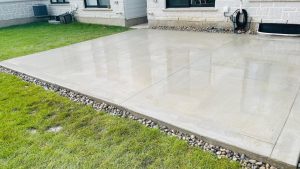
If your driveway has already experienced extensive freeze-thaw damage, it may be time to consider alternatives. Upgrading to concrete driveways or paver driveways can provide longer-term durability.
Concrete surfaces also benefit from protection using concrete sealant to prevent cracking and wear.
To see real examples of repaired and upgraded driveways, visit the gallery.
Preventative Maintenance Tips
To reduce how quickly freeze-thaw cycles damage asphalt driveways, follow these simple steps:
- Sealcoat your driveway every 2–3 years
- Fill cracks as soon as they appear
- Keep the surface clean and free of debris
- Ensure proper drainage
- Avoid using harsh chemicals that weaken asphalt
Consistent maintenance can dramatically extend your driveway’s lifespan and reduce repair costs.
When to Call a Professional
If you notice widespread cracking or potholes after winter, it’s best to seek professional help. Early intervention can prevent further damage and save money.
For expert advice, check the FAQ or reach out through the contact us page to schedule an inspection.
Final Thoughts
It’s clear how freeze-thaw cycles damage asphalt driveways over time, especially in regions with harsh winters. The combination of water infiltration and temperature fluctuations creates a cycle of expansion and contraction that weakens asphalt from the inside out.
With proper maintenance, including regular asphalt sealant and timely repairs, you can protect your driveway and avoid costly replacements. Taking action early ensures your driveway stays strong, safe, and visually appealing for years to come.