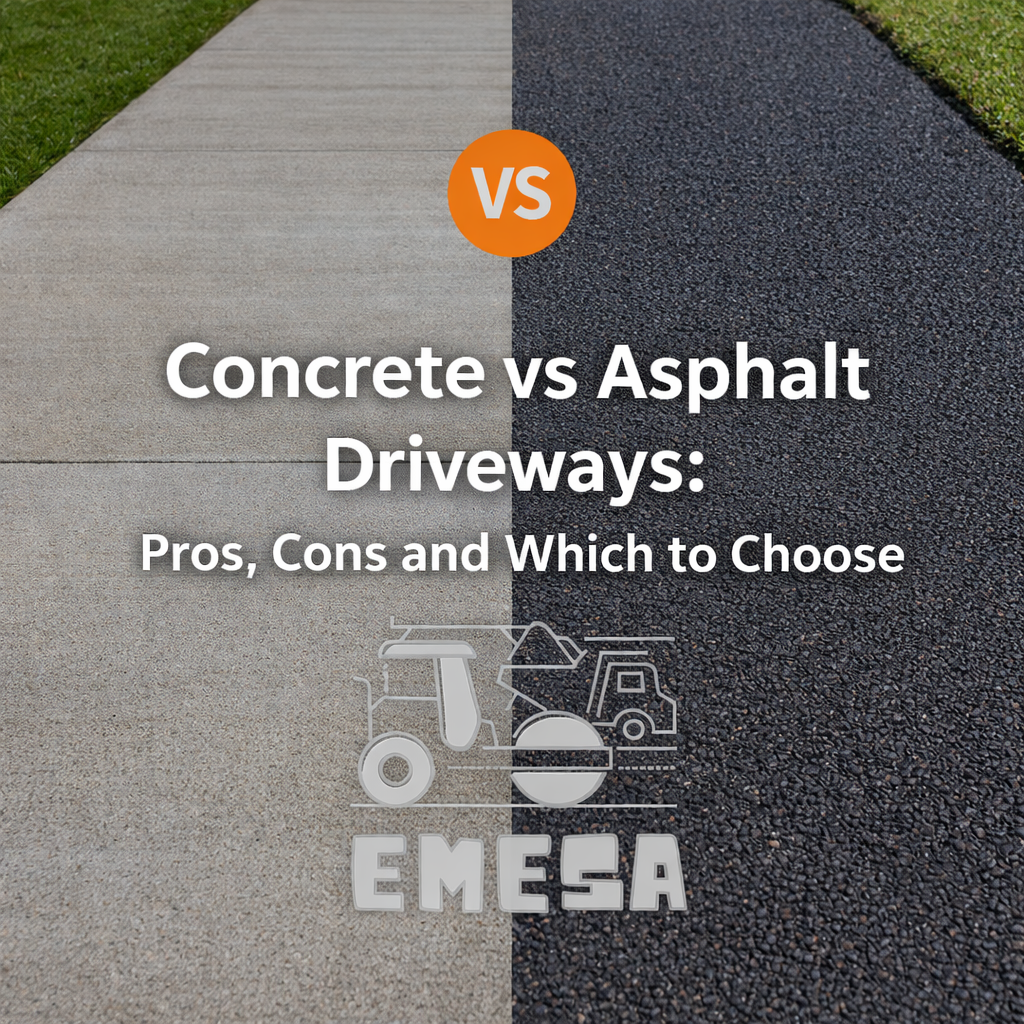
Concrete vs Asphalt Driveways: Pros, Cons and Which to Choose
Choosing between concrete vs asphalt driveways is one of the most important decisions homeowners make when upgrading or installing a new driveway. Both options offer durability and curb appeal, but they differ significantly in cost, maintenance, lifespan, and appearance.
Understanding the differences between concrete vs asphalt driveways helps you select the right surface based on your budget, climate, and long-term expectations.
Understanding Asphalt Driveways
Asphalt driveways are popular due to their affordability and quick installation. They are made from a mixture of aggregates and bitumen, creating a flexible surface that handles temperature changes well.
Many homeowners choose asphalt paving because it provides a smooth, clean finish and can often be used within a day or two of installation. Asphalt is especially suitable for colder climates where freeze-thaw cycles are common.
However, asphalt requires regular maintenance to stay in good condition.
Pros and Cons of Asphalt Driveways
One major advantage of asphalt is cost. Asphalt driveways are generally less expensive upfront than concrete. Repairs are also easier and more affordable.
On the downside, asphalt surfaces fade over time and are more susceptible to cracking if left unprotected. Regular application of asphalt sealant is necessary every few years to prevent moisture damage and surface deterioration.
Without sealcoating, asphalt driveways can age quickly and require resurfacing earlier than expected.
Understanding Concrete Driveways
Concrete driveways are known for their strength and long lifespan. When properly installed and maintained, concrete can last decades with minimal structural issues.
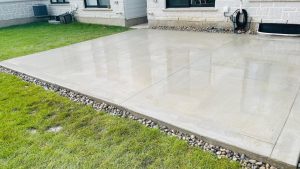
Homeowners often choose concrete driveways for their clean, modern appearance and resistance to heavy loads. Concrete also offers decorative options such as stamped finishes and custom textures.
However, concrete typically costs more upfront and takes longer to cure before use.
Pros and Cons of Concrete Driveways
Concrete driveways offer excellent durability and require less frequent maintenance than asphalt. They do not need resealing as often and resist oil stains better when protected with concrete sealant.
The main drawback is cost. Concrete installation is more expensive, and repairs can be more noticeable if cracking occurs. Concrete is also more rigid, which means extreme temperature changes can cause cracking over time if the base is not properly prepared.
Maintenance Comparison: Concrete vs Asphalt Driveways
When comparing concrete vs asphalt driveways, maintenance is a major factor.
Asphalt requires routine sealcoating every 2–3 years to protect against moisture and UV damage. Concrete requires less frequent maintenance but benefits from periodic sealing to preserve its appearance and prevent surface wear.
Both surfaces benefit from proper drainage and timely repairs to extend their lifespan.
Cost Comparison and Long-Term Value
Asphalt driveways are more affordable initially, making them attractive for budget-conscious homeowners. However, the cost of repeated maintenance over time can add up.
Concrete driveways cost more upfront but often provide better long-term value due to their longer lifespan and reduced maintenance needs.
Your choice between concrete vs asphalt driveways should consider both short-term budget and long-term ownership costs.
Climate and Usage Considerations
Climate plays a key role in deciding between concrete vs asphalt driveways. Asphalt performs better in colder regions because it flexes with temperature changes. Concrete performs well in warmer climates and resists heat damage.
Heavy vehicle traffic may favor concrete due to its strength, while residential driveways with moderate use often perform well with asphalt when properly maintained.
Visual Appeal and Customization
Concrete offers more customization options, including stamped and decorative finishes using stamping concrete techniques. Asphalt provides a sleek, uniform appearance that complements many homes.
To see real examples of both driveway types, explore completed projects in the gallery.
Which Driveway Should You Choose?
There is no universal answer when choosing between concrete vs asphalt driveways. Asphalt is ideal if you want a lower upfront cost and quicker installation. Concrete is better suited for homeowners looking for longevity and minimal maintenance.
If you’re unsure which option suits your property, the FAQ section covers common questions, or you can speak directly with an expert through the contact us page.
Final Thoughts
When comparing concrete vs asphalt driveways, the best choice depends on your budget, climate, maintenance expectations, and aesthetic preferences. Both options can perform exceptionally well when installed and maintained properly.
Whether you’re planning asphalt paving or upgrading to concrete driveways, Emesa provides expert guidance and professional installation to help you make the right investment.