Uneven Driveway Surface: Why It Feels Bumpy and What to Do
An uneven driveway surface can be frustrating, unsafe, and a warning sign that something deeper is happening below the driveway. Many homeowners first notice the issue when driving over small bumps, seeing low spots, or watching water collect in certain areas after rain. While it may seem like a minor inconvenience, an uneven driveway surface can lead to cracks, drainage problems, potholes, and long-term structural damage.
Understanding what causes a driveway to feel bumpy helps you decide whether you need maintenance, repair, resurfacing, or full replacement. Proper grading is essential because the Government of Canada recommends grading soil and paved surfaces so water drains away from the home.
Common Causes of an Uneven Driveway Surface
One of the most common causes of an uneven driveway surface is settling. Over time, the soil and base material beneath the driveway can shift, compact, or erode. When the base is no longer even, the driveway surface above it begins to sink or rise in certain areas.
Poor installation can also cause problems. If the base was not properly prepared, compacted, or graded during installation, the driveway may become uneven sooner than expected. This is especially common in areas with heavy moisture, freeze-thaw cycles, or poor drainage.
Tree roots, heavy vehicle traffic, and aging materials can also contribute to bumps and surface movement.
Why Asphalt Driveways Become Bumpy
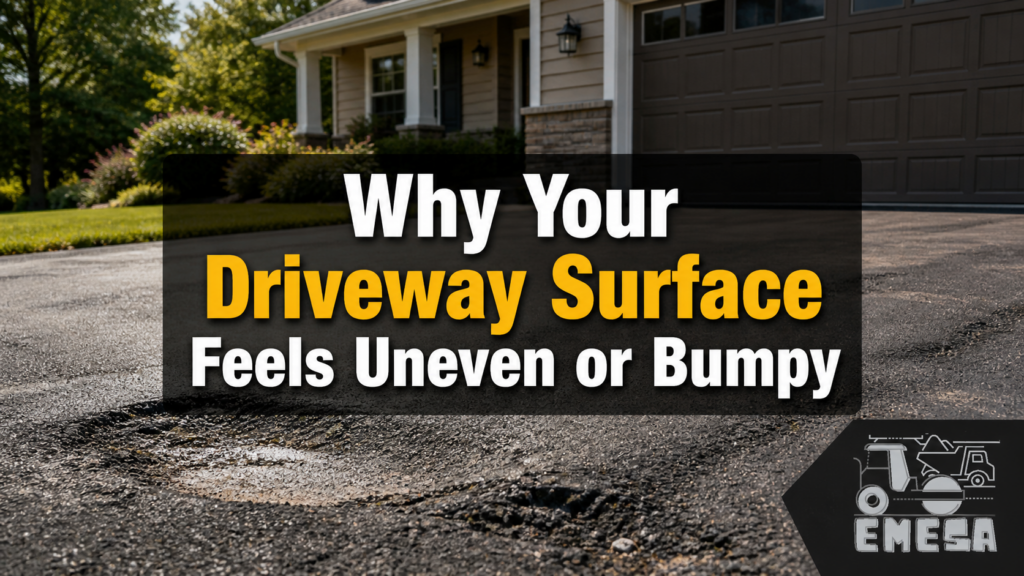
Asphalt is flexible, which helps it handle temperature changes better than some other materials. However, that flexibility also means it can shift when the base beneath it weakens. Moisture is one of the biggest problems for asphalt because water can enter cracks, soften the base, and create low spots.
If your asphalt driveway has dips, waves, or rough patches, professional asphalt paving may be needed to restore a smooth and durable surface. In some cases, minor surface issues can be repaired before the damage spreads.
Applying asphalt sealant after repairs can also help protect the surface from moisture, oil stains, and weather-related wear.
Why Concrete Driveways Become Uneven
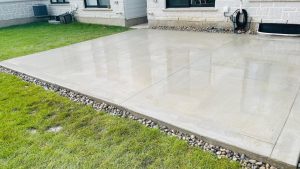
Concrete driveways can also develop uneven areas, especially when the base beneath the slabs settles. Because concrete is rigid, movement below the surface can cause cracking, lifting, or sinking sections. This often creates trip hazards and visible height differences between slabs.
Professionally installed concrete driveways are designed with proper base preparation and grading to reduce these risks. If the issue is minor, leveling or partial repair may be possible. If the surface is badly cracked or uneven, replacement may be the better long-term option.
A quality concrete sealant can help protect the surface, but it will not correct base movement or sinking.
Drainage Problems Can Make Bumps Worse
Poor drainage is a major reason an uneven driveway surface gets worse over time. When water sits on the driveway or flows underneath it, the base can weaken and shift. This causes depressions, raised edges, and unstable areas.
If water regularly pools in the same spots, the driveway may need regrading or drainage correction. Ignoring drainage problems allows the surface to continue moving, which can make future repairs more expensive.
Signs Your Driveway Needs Professional Attention
A few small surface imperfections may not require immediate replacement, but some warning signs should not be ignored. If you notice spreading cracks, potholes, deep dips, trip hazards, or water pooling, it is time to inspect the driveway more closely.
An uneven driveway surface can also affect curb appeal and reduce the usability of your driveway. If vehicles scrape, tires bounce, or walking feels unsafe, the problem should be addressed before it becomes more serious.
To see examples of properly finished driveway surfaces, you can browse the Emesa gallery.
Repair Options for an Uneven Driveway Surface
The right repair depends on the material and severity of the problem. Asphalt driveways may need patching, resurfacing, sealcoating, or complete repaving. Concrete may require lifting, leveling, crack repair, or replacement.
For decorative or modular surfaces, paver driveways can be easier to repair because individual sections can often be lifted and reset without replacing the entire driveway.
If you are unsure which option is best, the Emesa FAQ section can help answer common questions.
How to Prevent Future Driveway Bumps
Preventing an uneven driveway surface starts with proper installation. A stable base, correct grading, and quality materials all help reduce future movement. Regular maintenance is also important. Seal cracks early, keep drainage paths clear, avoid heavy loads when possible, and repair small problems before they spread.
Routine inspections after winter or heavy rain can help you catch early signs of settling or surface wear.
Final Thoughts
An uneven driveway surface is more than just a cosmetic issue. It can point to drainage problems, base failure, aging materials, or installation concerns. The sooner you identify the cause, the easier it is to protect your driveway and avoid costly repairs.
Whether you need asphalt paving, protective sealing, concrete driveways, or a full driveway upgrade, Emesa can help assess the surface and recommend the right solution. For professional guidance, reach out through the contact us page.
FAQ
Why does my driveway feel bumpy?
A driveway usually feels bumpy because of settling, poor base preparation, drainage problems, tree roots, or surface wear.
Can an uneven driveway surface be repaired?
Yes. Depending on the damage, an uneven driveway surface may be repaired with patching, leveling, resurfacing, or replacement.
Is an uneven asphalt driveway dangerous?
It can be. Uneven asphalt can create trip hazards, drainage issues, and vehicle damage if the surface continues to deteriorate.
Will sealcoating fix driveway bumps?
Sealcoating protects asphalt from moisture and wear, but it does not fix dips, bumps, or base movement.
When should I replace an uneven driveway?
Replacement may be needed if the driveway has deep sinking, widespread cracks, major potholes, or repeated drainage problems.